Features of High-Efficiency Furnaces

January 14, 2021

A high-efficiency furnace keeps your house warm while using less energy than a low-efficiency furnace. Furnace manufacturers use a variety of technologies and features to achieve high efficiency. Read on to learn about some of these features.

Two Heat ExchangersLady and a Man Checking High Efficiency Furnace — Paducah, KY — Triangle Heating & Cooling
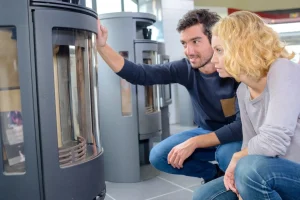
Lady and a Man Checking High Efficiency Furnace — Paducah, KY — Triangle Heating & Cooling
The heat exchanger separates the combustion chamber from the air you breathe. The heat exchanger ensures that heat, and not flue gases, reach your indoor air. A conventional or non-condensing furnace has a single heat exchanger. Unfortunately, such a furnace loses some heat up the chimney along with byproducts of combustion, such as combustion fumes and water vapor.

A condensing furnace, a type of high-efficiency furnace, has two heat exchangers. The second heat exchanger receives and condenses hot water vapor from the combustion process. The water vapor releases its heat as it condenses. The extra heat also warms the house, thereby enhancing the furnace’s overall efficiency.

Heat Recovery Ventilator

A standard furnace filters and reheats the air already inside the house, in addition to a little fresh air. The fresh air typically comes into the house via small cracks around doors and windows. That might not be the case if your house is extremely airtight. You may need a special air intake to draw fresh air into the house in such a case.

You need a heat recovery ventilator (HRV) if your furnace draws fresh air from outside. The HRV will preheat the fresh, cold air from outside using the stale indoor air. That way, the furnace doesn’t have to spend a lot of energy to raise the cold air’s temperature to match the indoor temperature.

Variable-Speed Blower

A furnace blower blows heated air into the duct system to circulate into different parts of the house. Some furnaces have single-speed blowers, while others come with variable-speed blowers. The furnaces with single-speed blowers operate either at full capacity or not at all. Those with variable-speed blowers can operate at different levels.

A variable-speed blower is more efficient than a single-speed blower. The variable-speed blower can reduce its speed, and hence energy demands, depending on the heating need. For example, the variable-speed blower can run at full speed when you first switch on the furnace and then reduce the speed to maintain the temperature.

Modulating Gas Valve

A high-efficiency furnace is likely to use a combination of a variable-speed blower and a modulating gas valve to reduce energy consumption. The modulating gas valve regulates the volume of gas entering the burners.

Say you have just come home and switched on the furnace. The variable-speed blower will run at full speed to supply as much heated air as possible. The modulating gas valve will also maximize gas supply to maximize heat production. The modulating gas valve reduces gas supply, and the blower reduces heat once the house temperature becomes comfortable.

Electronic Ignition

A gas furnace needs a source of heat to light the burners and keep them burning. Some furnaces use a gas-burning pilot light for this purpose. You light the pilot light first, and it keeps on burning as long as the furnace is on. Thus, the pilot light also consumes considerable energy.

High-efficiency furnaces use electronic ignition. An electronic ignition only sparks when needed — it doesn’t need to stay on all the time. Thus, the electronic ignition is more energy-efficient than its pilot light counterpart.

The efficiency of your furnace installation is just as important as the make and model. Once you have a high-efficiency furnace installed, you must also service and maintain it. Contact Triangle Heating & Cooling for a high-efficiency furnace the next time you want to replace your heating system. We will help you select and install a high-efficiency furnace for your house.
Triangle Heating & Cooling

About Us

Residential HVAC Services

Maintenance & Repair Services

AC Repair

Furnace Repair

Heating System Repair

Service Plus Program

New System Installations

AC System Installation

Heating System Installation

Blog

Contact Us

Let's Talk!

Thanks for stopping by! We're here to help, please don't hesitate to reach out!

Browse More Articles

How Can Summer Storms Affect My HVAC System?

How Can Summer Storms Affect My HVAC System?

Summer storms are common across Western Kentucky, Southern Illinois, Northwest Tennessee, and Southeast Missouri. Heavy rain, lightning, high winds, and power flickers can all affect your HVAC system. Outdoor units can collect leaves, limbs, grass clippings, and storm...

Summer FAQs: BEST AC PRACTICES

Summer FAQs: BEST AC PRACTICES

When summer settles into our region, it does not arrive politely. It shows up hot, humid, stormy, and ready to make your air conditioner work overtime. Across this region of Western Kentucky, Southern Illinois, Northwest Tennessee, and Southeast Missouri, summer HVAC...

Energy Efficient HVAC: Comfort, Savings, and Cleaner Air

Energy Efficient HVAC: Comfort, Savings, and Cleaner Air

Homeowners today want more than just heating and cooling. They want lower energy bills, improved indoor air quality, and systems that perform reliably year after year. That is where an energy efficient HVAC system makes a difference. Upgrading to an energy efficient...

Spring HVAC Maintenance: Add It to Your Spring Cleaning Checklist

Spring HVAC Maintenance: Add It to Your Spring Cleaning Checklist

As the seasons change, most homeowners focus on decluttering closets, washing windows, and deep cleaning floors. But one essential task should be at the top of your list: spring HVAC maintenance. After working hard all winter, your heating and cooling system needs...

Repair My Furnace vs Replace It?: Which is Cheaper?

Repair My Furnace vs Replace It?: Which is Cheaper?

As a homeowner, it’s never fun when you wake up to a freezing cold house, especially more  than once. If you have been finding yourself having to call a heating and cooling repairman  more and more frequently, you might be asking yourself, “Should I repair my furnace?...

What to Do When You Need Emergency HVAC Repair in Paducah, KY

What to Do When You Need Emergency HVAC Repair in Paducah, KY

What to Do When You Have an HVAC Emergency  There’s never a convenient time for your heat or air to stop working, especially in the middle of Kentucky’s unpredictable weather. Whether your furnace fails on a freezing night or your air conditioner quits during a summer...

Preparing Your Home for Fall: Heating and Air in Paducah, KY

Preparing Your Home for Fall: Heating and Air in Paducah, KY

How to Prepare Your Heating and Air for Fall in Paducah As October arrives in western Kentucky, homeowners start thinking about cozy evenings, cooler nights, and preparing their homes for the colder months ahead. At Triangle Heating & Air, we specialize in keeping...

Why a Heating System Tune-Up Is Essential Before Fall Gets Cold

Why a Heating System Tune-Up Is Essential Before Fall Gets Cold

As summer winds down and the air turns crisp, now is the perfect time to give your heating system the attention it deserves. A heating system tune-up is one of the smartest things you can do to prepare your home for the colder months ahead. Whether you rely on a...

How to Tell If It’s Time to Replace an Air Conditioning System

How to Tell If It’s Time to Replace an Air Conditioning System

As summer winds down, homeowners often find themselves asking the same question: Is it time to replace my AC unit? If your system has struggled through the hottest months or left you feeling less than comfortable, now is the perfect time to assess whether it can make...